


AI Policy Series: Artificial Intelligence in Healthcare

As Nevada continues to face a shortage of healthcare workers, policymakers have identified healthcare workforce development as a key priority. Artificial intelligence has emerged as a promising solution to address workforce shortages and improve healthcare outcomes.
While AI has demonstrated effectiveness in supporting healthcare providers across diagnosis and treatment, medical research, and administrative functions, AI’s rapid development and lack of regulatory guidance poses significant concerns regarding patient safety, data privacy, algorithmic bias, and public trust.
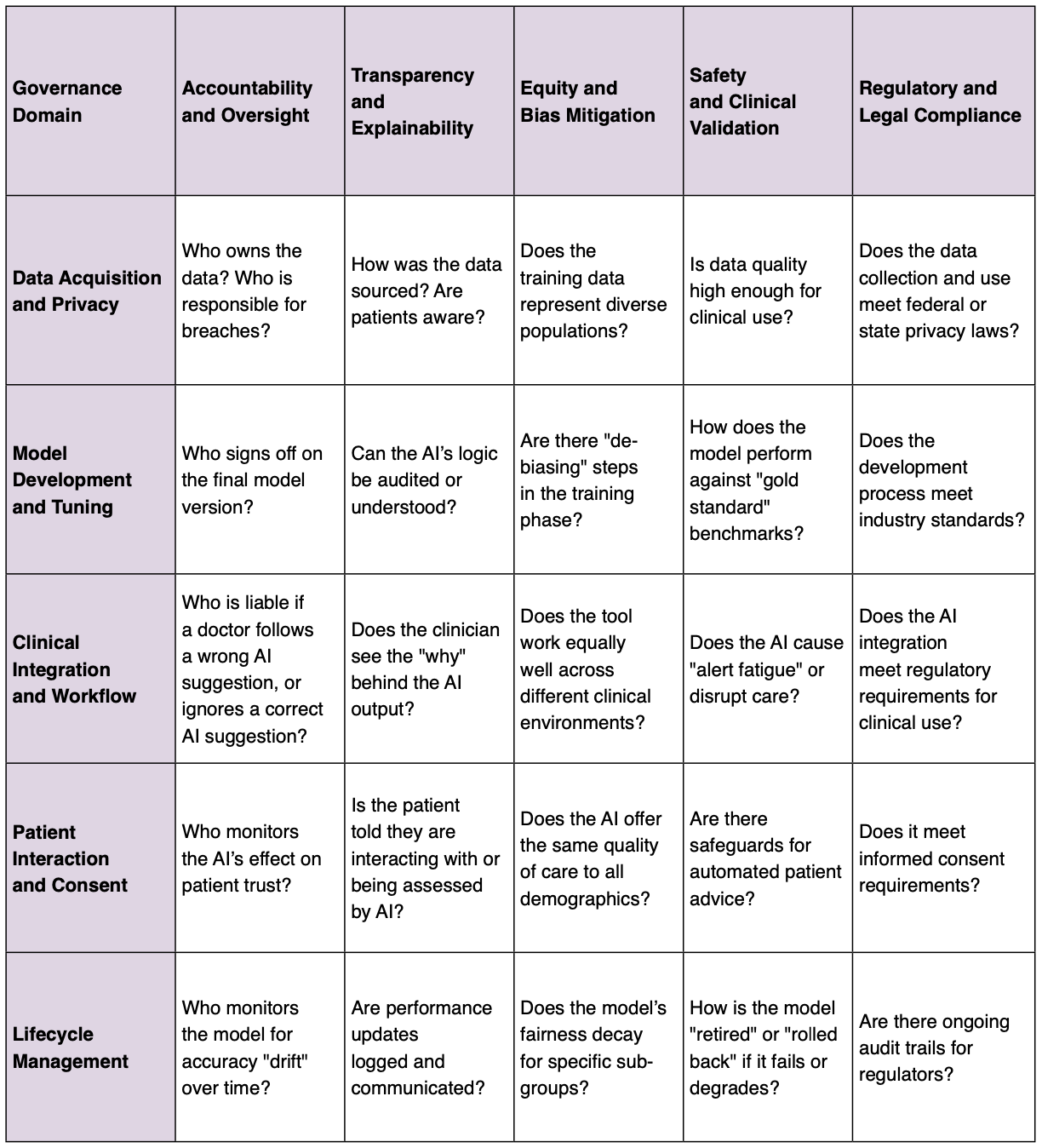
In this policy brief, the Guinn Center assesses current applications of AI in healthcare while also evaluating the risks and limitations associated with AI adoption. Through examining the evolving regulatory landscape in Nevada and beyond, the brief identifies policy gaps and offers a framework to guide decision-makers in balancing innovation with the safeguards necessary to ensure responsible AI application in healthcare.
Key Takeaways:
- Artificial Intelligence (AI) is emerging as a critical tool for Nevada in addressing healthcare workforce shortages, improving health outcomes, mitigating disease outbreaks, and improving administrative efficiency.
- AI tools are being used in the healthcare field for predictive modeling, medical diagnosis and treatment, pharmaceutical research, billing and insurance claim management, clinical record keeping, and more, with studies finding that they improve accuracy and efficiency.
- Regulation of AI at the state level is complicated by the federal government’s desire for a standardized national framework. This report offers a framework for analyzing policy risks and opportunities in AI deployment.
Future Research:
As AI technology evolves, so do proposed policies and regulations. The Guinn Center will continue to explore AI use across topic areas such as education, workforce development, and healthcare. Similarly, these briefs will continue to evolve as we learn new information.
Explore other briefs in this series:
AI Policy Series: AI in Higher Education
AI Policy Series: AI in K-12 Education
AI Policy Series: AI in Elections
AI Policy Series: AI and Government
For questions or comments about this study, and to receive an ADA-compliant version for the visually impaired, please email us at info@guinncenter.org.