


Understanding Student Experiences with Nevada's Native American Fee Waiver

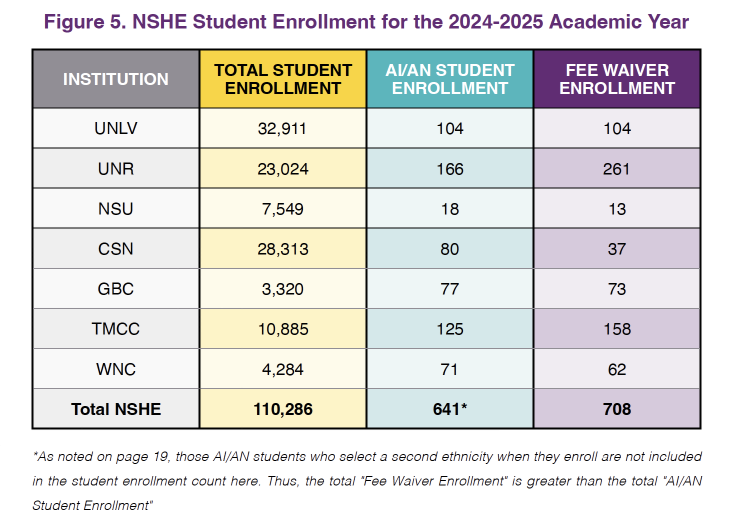
Nevada’s Native American Fee Waiver Program, implemented in 2021 across most institutions of the Nevada System of Higher Education (NSHE), has significantly reduced financial barriers for Native American students and improved access to higher education. The number of participants has grown substantially, and students report meaningful benefits. However, this study identifies challenges with administrative complexity, uneven outreach, data gaps, and unmet non-tuition financial needs that limit the program’s full impact.
“If I didn’t qualify for this...I would not have come back to school. This tuition waiver really allowed me to come back to school...without it, I wouldn’t be back at [institution].”
Key Data Points
- Fee waiver recipients increased from 140 students (2021–22) to 708 students (2024–25) across NSHE institutions.
- Seven of the eight NSHE institutions participate, serving students in the research university, state college, and community college contexts.
- Native American graduation rates are often below 30 percent, compared to a systemwide average closer to 45 percent.
- Students and administrators report inconsistent institutional support, processing delays across multiple offices, cultural competency gaps, and fragmented outreach efforts.
Policy Considerations
The report outlines several policy considerations to improve the consistency, effectiveness, and sustainability of the Native American Fee Waiver across the Nevada System of Higher Education. A primary focus is the need for clearer institutional infrastructure, including dedicated fee-waiver offices or staff who can serve as consistent points of contact for students and reduce confusion during the application and eligibility processes.

Strengthening staff capacity through regular, systemwide training that covers both procedural requirements and cultural context is also recommended, as is improving formal relationships with tribal communities: structured consultation, consistent communication, and feedback mechanisms can help build trust and transparency.
To reduce delays and barriers, the report calls for automating early identification of potentially eligible students within admissions systems and increasing post-enrollment engagement through proactive check-ins and access to academic supports. Financial sustainability is another key concern, with recommendations to secure dedicated state funding, maintain the waiver as a “first-dollar” award, and expand scholarship caps so the waiver does not displace other aid.
Finally, the report highlights the importance of standardizing data collection and public reporting on enrollment, retention, and graduation outcomes to strengthen accountability and inform future policy decisions.
Recommendations Summary
- Establish dedicated fee waiver offices or roles
- Increase systemwide staff training
- Strengthen formal relationships with tribes
- Automate early identification of eligible students
- Increase post-enrollment engagement and support
- Provide stable, dedicated state funding
- Create clear and consistent policies across institutions
- Expand scholarship caps to avoid aid displacement
- Maintain the fee waiver as a “first-dollar” award
- Standardize data collection and public reporting
To obtain an ADA screen-reader-compatible report, please get in touch with us at info@guinncenter.org.