


New Data Resource: Status and Achievement of Women in Nevada
.png)
Women in Nevada contribute significantly to the state’s economic, social, and civic vitality, with notable gains in educational attainment, political representation, and entrepreneurship. Yet disparities remain in areas such as pay equity, affordable housing, safety, and long-term financial stability. To highlight these important metrics, the Guinn Center has created an interactive storymap that visualizes current data key to understanding women's economic security and well-being through maps, charts, and narrative.
Key Data Points
Economics & Affordability
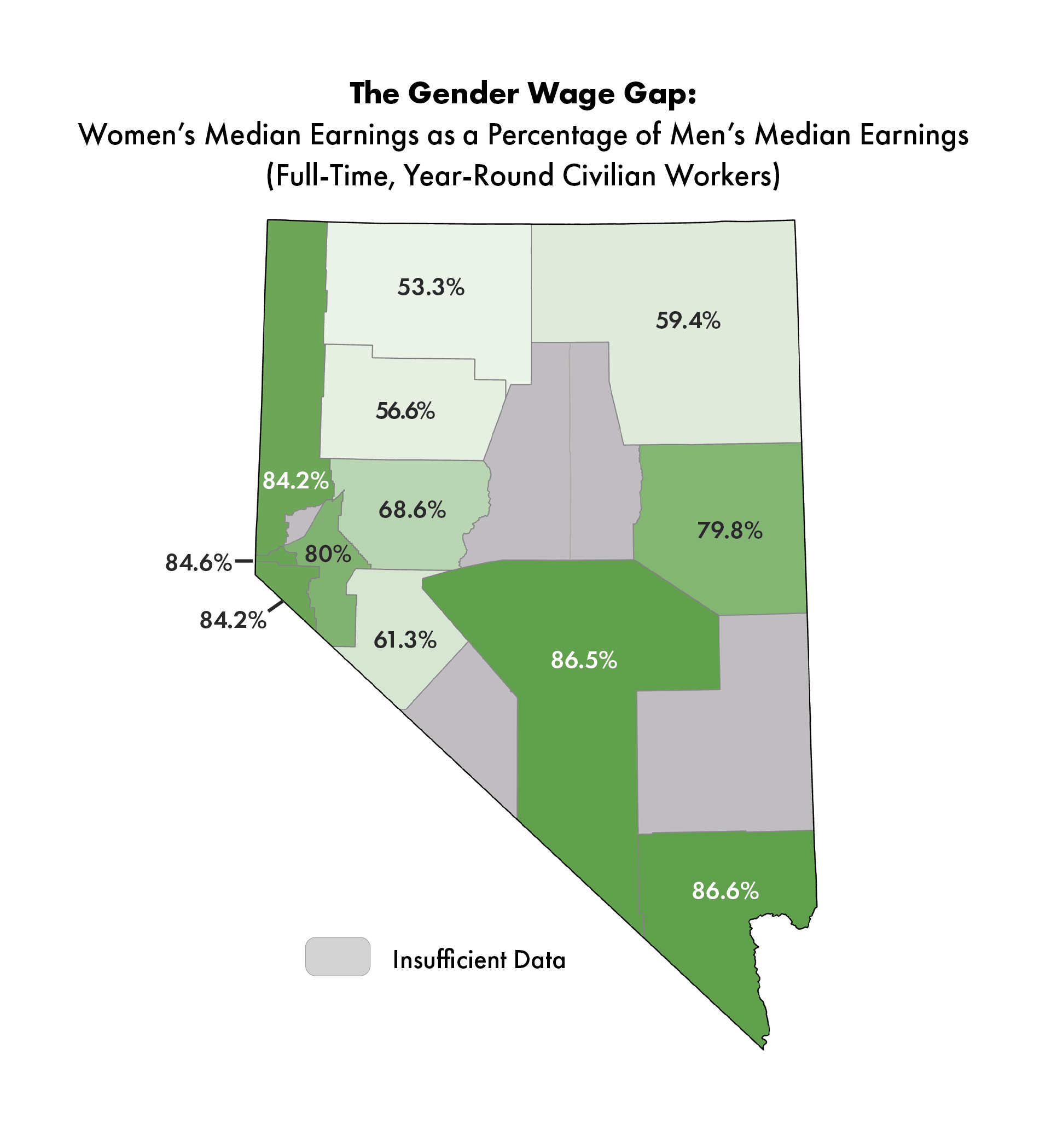
- Women working full-time in Nevada currently earn 82.9% of men's median earnings, with median earnings of $50,953.
- 76% of single women renters are cost-burdened, and over half are paying at least 50% of their pretax income to rent.
- Women aged 65+ earn about two-thirds of men’s income in retirement.
Health
- More than 20% of women have avoided healthcare due to cost.
- 14% of women lack health insurance, increasing to 22% among lower-income women.
Safety
- An estimated 39% of Nevada women will experience some form of intimate partner violence in their lifetime.
- About 70% of domestic violence victims in Nevada are women.
Education
- Women comprise nearly 60% of higher education enrollment.
Political Representation
- Women represent about two-thirds of the Nevada Legislature, far exceeding national averages.
Findings
- Mothers, women of color, and women over 55 have greater wage disparities than other women. The gender pay gap also varies significantly by county and by occupation.
- Women in Nevada are more likely to complete all levels of educational attainment from high school graduation through graduate degrees.
- Childcare costs vary significantly by county and by child age. Infant through pre-K aged care can cost from 25% to 35% of a single mother’s median income.
- Women currently own 41% of businesses in Nevada, contributing over $ 25 million to the state’s economy.

Next Steps
This resource provides a snapshot of current conditions, underscoring the need for continued research to better understand how these challenges shape long-term outcomes. While this report does not make policy recommendations, it highlights how well-crafted policy can help address persistent disparities and improve women’s well-being.
This resource also highlights the need for more comprehensive and consistent data collection to inform future policy discussions on topics including women’s economic security, healthcare access, mental health, housing, and safety. Nevada has many diverse urban and rural communities, and statewide or county averages may not reflect all experiences. In some cases, gender-specific data are unavailable, and broader population data are used.

Note: This resource is best viewed on a computer, as it is not optimized for small screens.