


Literacy in Nevada: Part I — Nevada's Classrooms and National Trends

Americans and Nevadans are struggling with literacy – the ability to read and write. It is estimated that over half of American adults read below a sixth-grade level, and by some measures, US adult performance in literacy and numeracy is among the lowest of the world’s developed economies.
The problem begins early: in our schools. In 2024, only 31 percent of American fourth graders and 35 percent of twelfth graders were proficient in literacy. The situation is similar in Nevada, with only 30 percent of fourth graders reaching proficient or advanced levels of literacy.
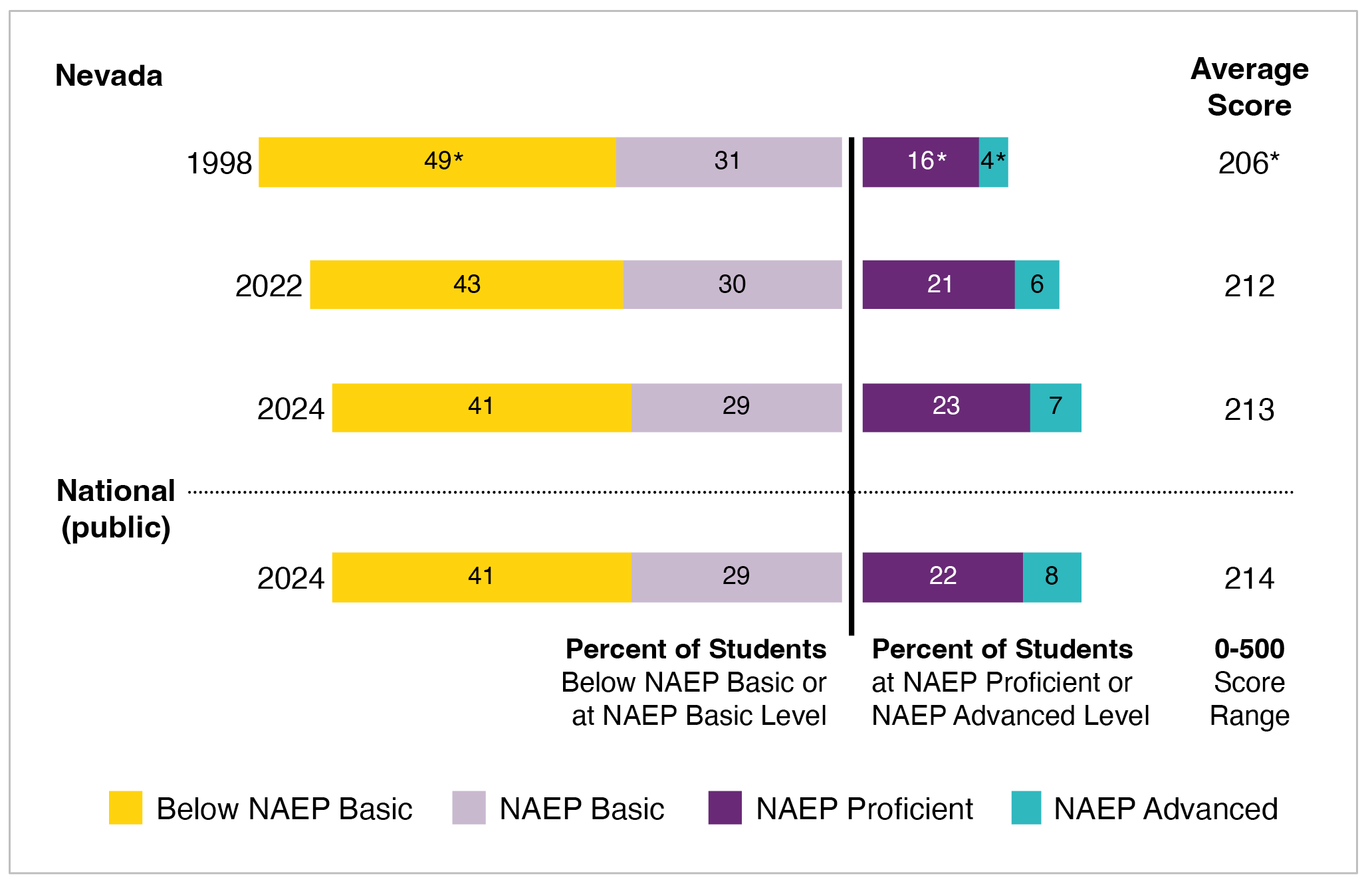
There are many contributing factors to declining literacy, but research has pointed to four factors as the main hinderance for reading development in children:
1. Deficits in phoneme awareness and developing the alphabetic principle
2. Deficits in acquiring reading comprehension strategies and applying them to the reading of text
3. Deficits in developing and maintain the motivation to learn to read
4. Limitations in effectively preparing teachers
These compound with environmental and socioeconomic factors: a lack of comprehensive pre-K education, which research shows is very effective; very high chronic absenteeism, which keeps students from learning; and a host of family and personal factors that frustrate the education process.
What our study found:
We examined data from ten Nevada third-grade classrooms and found that more than half had students spanning at least five grade levels in their literacy abilities. Put another way, it is as though many teachers have children from first through fifth grade in a single classroom. This makes it essential that teachers in the early grades are well-versed in the latest techniques for identifying and addressing the literacy sub-skills in which each student is struggling. As this study was limited to ten classrooms, these findings should be interpreted as descriptive rather than representative of all of Nevada’s third-grade classrooms.
But the news isn’t all bad.
In upcoming companion research to this report, we will explore progress happening on the literacy front in our schools, in Nevada’s state policy response, and in the latest brain science available to our educators as they tackle this vital and challenging issue.